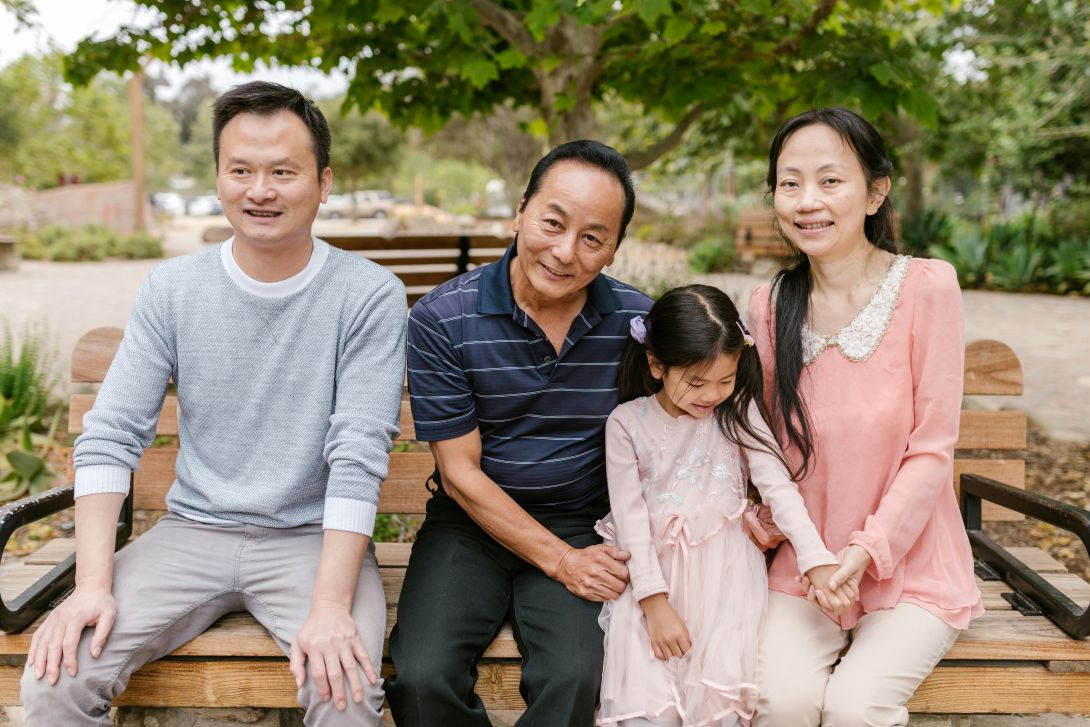
Pressure doesn’t disappear as we grow - it just changes shape. If you look closely, stress is present in every decade of life. It simply wears different masks.
For a six-year-old, it might look like tears before a school function.
For a sixteen-year-old, it hides behind a locked bedroom door.
At twenty-eight, it sounds like “I should be further in life.”
At forty-two, it becomes silent exhaustion.
At sixty-five, it often sits quietly beside loneliness.
We don’t outgrow stress. We grow around it. And how we manage it must evolve with us.
1. Children Ages 5–12: When Big Feelings Have Small Words
Children don’t usually say, “I’m overwhelmed. “They say, ‘My stomach hurts.’” Or they refuse school. Or they get angry over something tiny.
Globally, the World Health Organization estimates that 1 in 7 young people aged 10–19 lives with a mental health condition, with anxiety among the most common. Even in younger children, anxiety disorders are increasingly reported - the U.S. National Institute of Mental Health estimates around 9% of children and adolescents experience anxiety disorders.
But statistics aside, any parent or teacher can tell you: children feel pressure earlier than we think. School performance, competition, parental expectations, over-scheduling, exposure to screens - it adds up.
What actually helps? Not motivational speeches. Not a comparison. Children regulate stress through safety. Through routine. Through predictable evenings. Through play that has no objective. Through one adult who kneels down and says, “Tell me what happened.” And most importantly - through calm adults. A child’s nervous system borrows from the grown-ups around them.

2. Teenagers Ages 13–19: When Everything Feels Urgent
Teenage stress is loud internally, even when it looks quiet externally. Exams feel like destiny. A comment about appearance can echo for months. Social media magnifies comparison. A fight with a friend feels catastrophic.
Research from the American Psychological Association shows that teenagers during the academic year report stress levels comparable to adults. The World Health Organization identifies suicide as one of the leading causes of death among adolescents globally. In India alone, the National Crime Records Bureau recorded over 13,000 student suicides in 2022.
Those numbers are not abstract. They represent young minds that felt trapped. Teenagers don’t need constant fixing. They need grounding. They need:
Movement - because physical activity discharges stress hormones.
Boundaries - especially with screens.
Validation - “I see that this is hard for you.”
Privacy - not every feeling needs interrogation.
Above all, they need to know their worth is not attached to marks.

3. Young Adults Ages 20–35: The Decade of Invisible Pressure
This stage looks glamorous online. Promotions. Engagement photos. Travel reels. Startups. Milestones. But privately? It can be one of the most anxious phases.
The World Health Organization estimates over 300 million people worldwide live with anxiety disorders, with young adults forming a significant share. The International Labour Organization continues to report higher unemployment rates among youth compared to older adults, with financial instability being one of the strongest stressors in this age group.
At this age, stress often sounds like, “I’m behind”, “I should earn more”, “Everyone else is settled”, “What if I chose the wrong path?” Comparison becomes chronic. Managing stress here is less about meditation apps and more about clarity. Clear finances reduce fear, boundaries reduce burnout, and timelines reduce panic. And sometimes, deleting the app that triggers comparison helps more than a motivational podcast ever will.

4. Adults Ages 36–55: The Sandwich Years
This is the era of responsibility. Career peaks. Children growing up. Ageing parents. Mortgage payments. Health reports. Stress becomes steady rather than dramatic.
The American Institute of Stress reports that nearly 80% of workers feel stress at work. The World Health Organization links chronic stress to increased risk of cardiovascular disease - still the leading cause of death globally.
This isn’t the dramatic anxiety of teenage years. This is quiet accumulation. Emails. School meetings. Medical appointments. Bills. Deadlines. And in the middle of it, very little personal time. At this stage, stress management requires permission - permission to rest without guilt.
It requires delegation. It requires saying no to additional commitments. It requires annual health checkups instead of postponing them.
And perhaps most importantly - it requires remembering that productivity is not identity.

5- Older Adults (Ages 56 and beyond): Ageing with Dignity and Emotional Strength.
Later life stress is different. It’s less about ambition and more about adjustment.
Retirement can feel liberating or disorienting. Social circles shrink. Physical strength changes. Loved ones may be lost.
The World Health Organization estimates that around 14% of adults aged 60 and above live with a mental disorder, with depression being common. Social isolation has been linked globally to increased health risks in older adults.
At this age, stress often comes from silence. The solution is connection, community groups, volunteering, daily walks, learning something new, and sharing stories. Purpose stabilises the mind. Routine protects it. Human conversation strengthens it.

What Remains True at Every Age
Across all decades, certain fundamentals never change: sleep matters, movement matters, food matters, connection matters, and asking for help matters. Stress becomes dangerous when it is ignored long enough to become normal.
Bottom line
Stress is not proof that life is broken. It is proof that life is active. But unmanaged stress hardens us. Managed stress strengthens us.
At five, we need reassurance.
At fifteen, we need understanding.
At twenty-five, we need perspective.
At forty-five, we need balance.
At sixty-five, we need connection.
The tools evolve; the human need does not.
And that need is simple: to feel safe, capable, and not alone - at every age.